PU vs PIR panels: insulation value, fire performance and cost
A detailed comparison of PU and PIR cores on thermal conductivity, fire performance, thermal stability and cost, to help pick the right panel for each project.

A detailed comparison of PU and PIR cores on thermal conductivity, fire performance, thermal stability and cost, to help pick the right panel for each project.
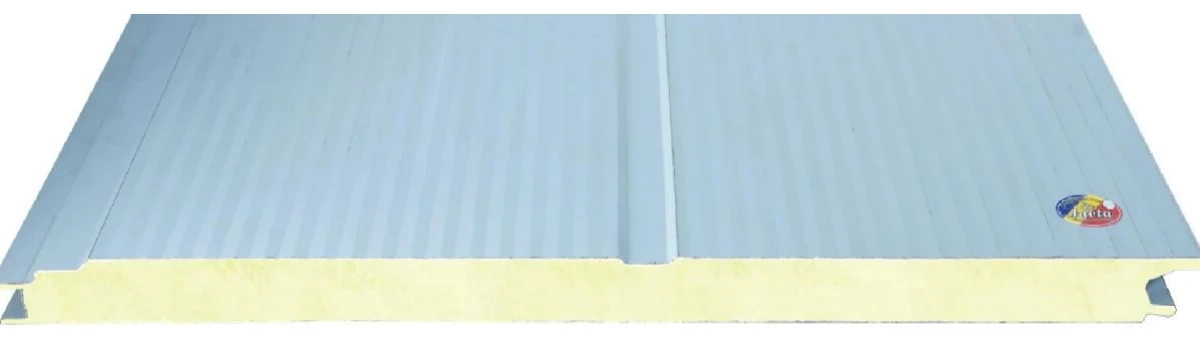
PU and PIR are both polyurethane-based insulation cores and look almost identical. The difference lies in the chemistry of the core, and it shows up clearly in fire performance, thermal stability and price.
| Criterion | PU (polyurethane) | PIR (polyisocyanurate) |
|---|---|---|
| Thermal conductivity | 0.022 – 0.024 W/m.K | 0.019 – 0.022 W/m.K |
| Fire performance | Moderate | Very good |
| Thermal stability | -40°C to +80°C | -40°C to +120°C |
| Best suited to | Factories, offices, civil buildings | Cold stores, cleanrooms, projects with high fire requirements |
| Cost | Lower | Higher |
PIR’s thermal conductivity is about 10% lower than PU’s. Across a large cold store envelope that difference accumulates into a meaningful electricity saving over the operating life — enough to cover the higher material cost up front.
This is the biggest difference. PIR’s isocyanurate ring structure is more thermally stable and chars when exposed to flame, forming a protective layer that limits spread and reduces smoke. PU is moderate, and suits projects without strict fire requirements.
PU works reliably from -40°C to +80°C; PIR extends that to +120°C. On a factory roof in full sun in central or southern Vietnam, surface temperatures swing high enough that PIR is the safer long-term choice.
PIR costs more than PU. But the sum should be done over the whole life: running electricity, insurance, and the risk of having to replace the panels if the building’s fire requirements are later upgraded.
No panel is best for every project — only the one that best fits that project’s technical requirements and budget.
– Phu Son Group
Phu Son Group's engineers are ready to help.

A close look at the build-up, the insulation principle and the advantages of PU/PIR panels — a material used widely in factories,…
Read more
A look at the layers that give a PU/PIR panel its thermal, acoustic and fire performance, and how to read the specification…
Read more
The wrong thickness and sloppy jointing are the two most common reasons a panel system underperforms. This article sets out the thickness…
Read more