Two mistakes account for most panel systems that fall short: the wrong thickness, and careless jointing. Neither shows at handover; both appear after a few months in service, by which time putting them right costs many times what was saved.
1. Choosing panel thickness by use
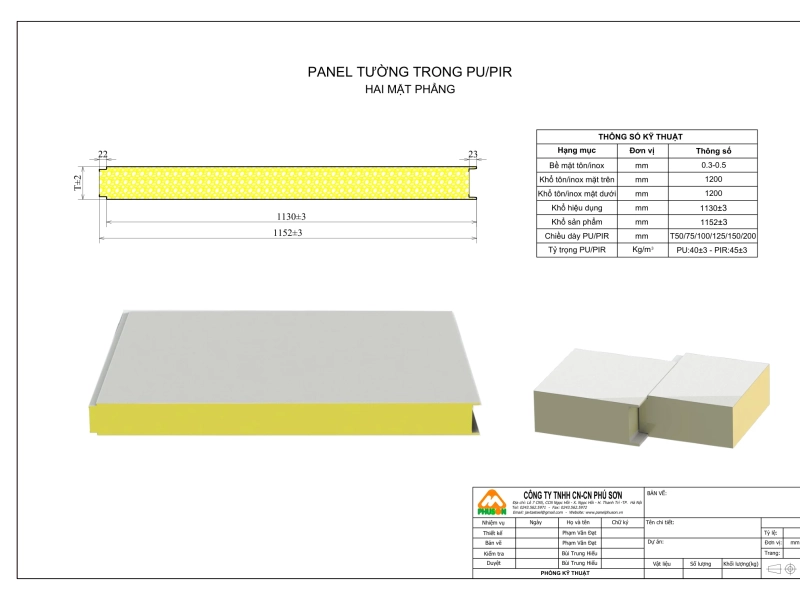
Thickness directly determines how well the panel holds temperature. The ranges below are the usual choices, and should be checked against each project’s own heat load calculation:
| Use |
Usual thickness |
Notes |
| Office partitions and ceilings |
50 mm |
Acoustics and appearance come first |
| Production factories |
50 – 75 mm |
Balances cost against performance |
| Chilled stores |
75 – 100 mm |
0°C to 15°C |
| Cold and freezer stores |
100 – 200 mm |
Deep sub-zero; needs a camlock joint |
Don’t save in the wrong place: dropping one thickness step on a cold store saves a few per cent on materials but raises the compressor’s electricity bill for the life of the store.
2. What to watch during installation
- Check the substrate before fitting: the frame and the wall base must be true; any significant deviation warps the panel and opens the joint.
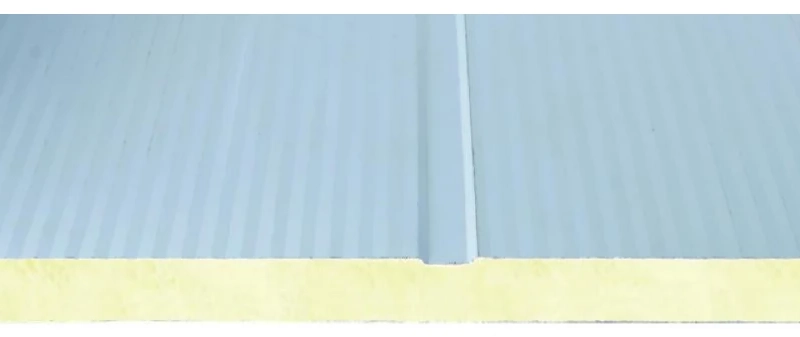
- Draw the joints up tight: this is where most heat escapes. On a cold store, every joint needs foaming and taping.
- Detail the thermal bridges at junctions: corners, the wall base and pipe penetrations — use the right trims and filling materials.
- Protect the surface while fitting: only strip the protective film once work is complete, so the steel is not scratched.
- Seal at the fixings: use the correct screws with rubber washers and do not overtighten.
3. Maintenance after handover
Clean the steel surface regularly and recheck joints and fixings after the first rainy season. Catching an open joint early costs very little; letting water into the core means replacing the whole panel.
Conclusion
The final quality of an envelope depends about equally on the material and on the standard of installation. Choosing a supplier with its own installation team, or with clear installation guidance, reduces that risk considerably.