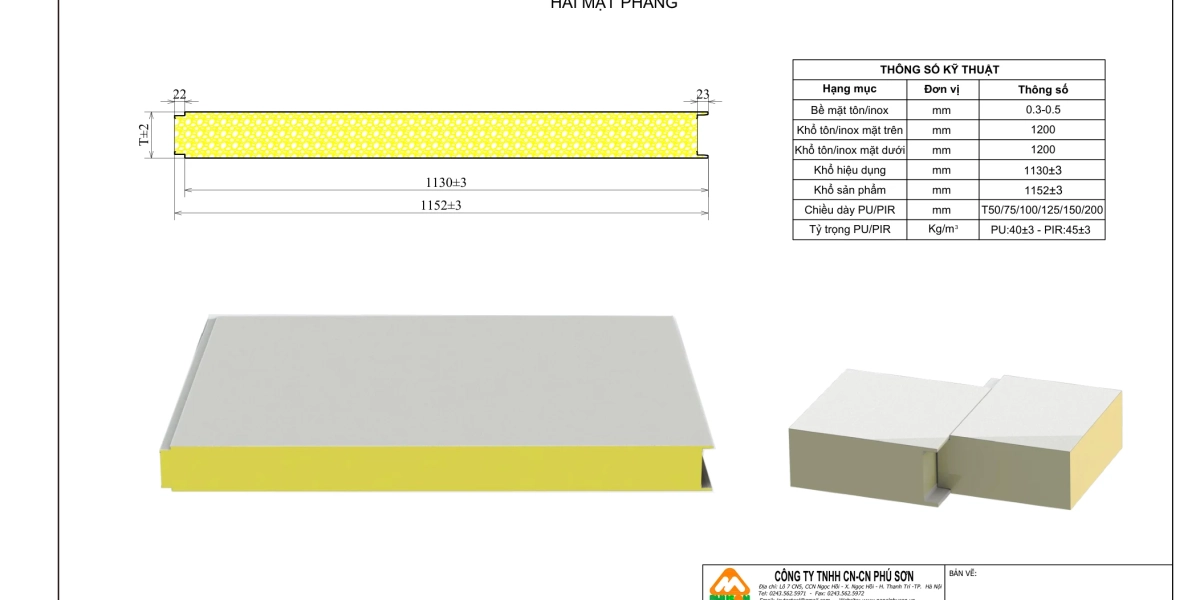
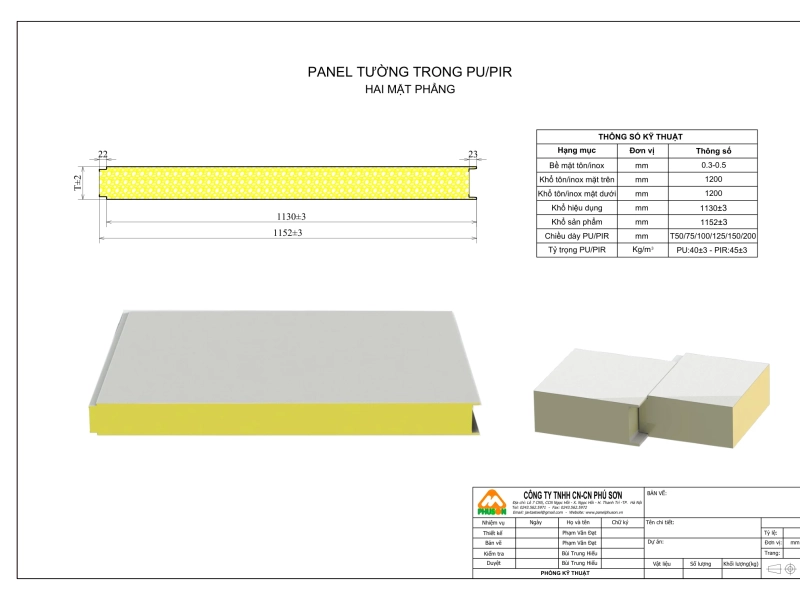
A panel’s thermal, acoustic and fire performance does not come from the core alone. It is the result of four components working together: the steel facing, the adhesive layer, the insulation core and the interlocking joint. Understanding each one lets a client read the specification table and avoid picking the wrong configuration.
The four layers of a PU/PIR panel
1. The steel facing
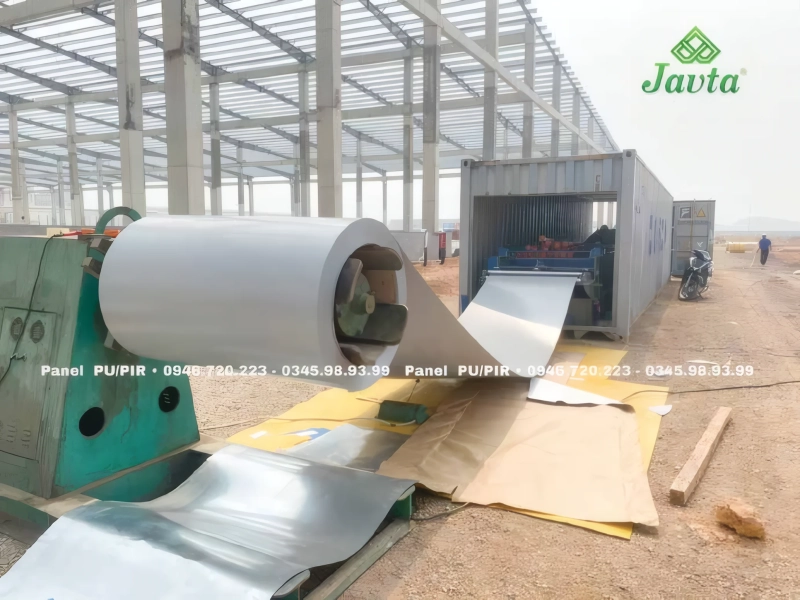
Both faces normally use galvanized steel, aluminium-zinc coated steel or stainless steel, typically 0.35 – 0.7 mm thick. Thicker steel is stiffer and takes impact better, but adds weight and cost. In damp or chemical environments, and in food processing, stainless or aluminium-zinc coated steel is preferred for corrosion resistance.
- Galvanized steel: common and inexpensive, suited to ordinary factories.
- Aluminium-zinc coated steel: better corrosion resistance and a longer life in coastal air.
- Stainless steel: for cleanrooms, food and pharmaceutical plants and areas with strict hygiene requirements.
2. The adhesive layer
A two-component polyurethane adhesive bonds the steel to the core. It gets the least attention of any layer, yet it decides how long the panel lasts: poor adhesion lets the steel lift off the core after a few hot seasons, at which point the panel loses its structural capacity and the surface starts to blister.
3. The insulation core
PU and PIR cores run at 35 – 45 kg/m³. The higher the density, the finer the cell structure, the lower the thermal conductivity and the better the compressive strength. A low-density core is cheaper but tends to settle over time, opening the joints and reducing insulation performance.
Quick check: ask the supplier for test reports on core density and thermal conductivity — do not go on the panel’s nominal thickness alone.
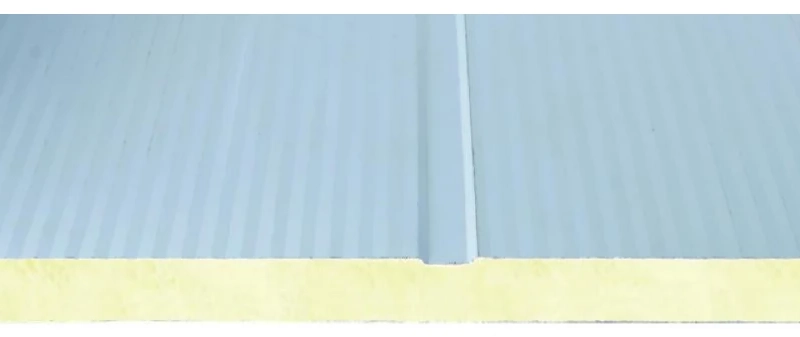
4. The interlocking joint
A tongue-and-groove or camlock joint decides how tight the whole system is. For cold stores and cleanrooms the camlock is preferred, because it draws the joint up tight and limits the thermal bridge at the junction — the biggest single source of heat loss in any envelope.
Conclusion
When comparing quotes, check all four layers rather than just the panel thickness. The price difference usually sits in the core density and the type of steel — the two factors that most directly affect how long the building lasts.